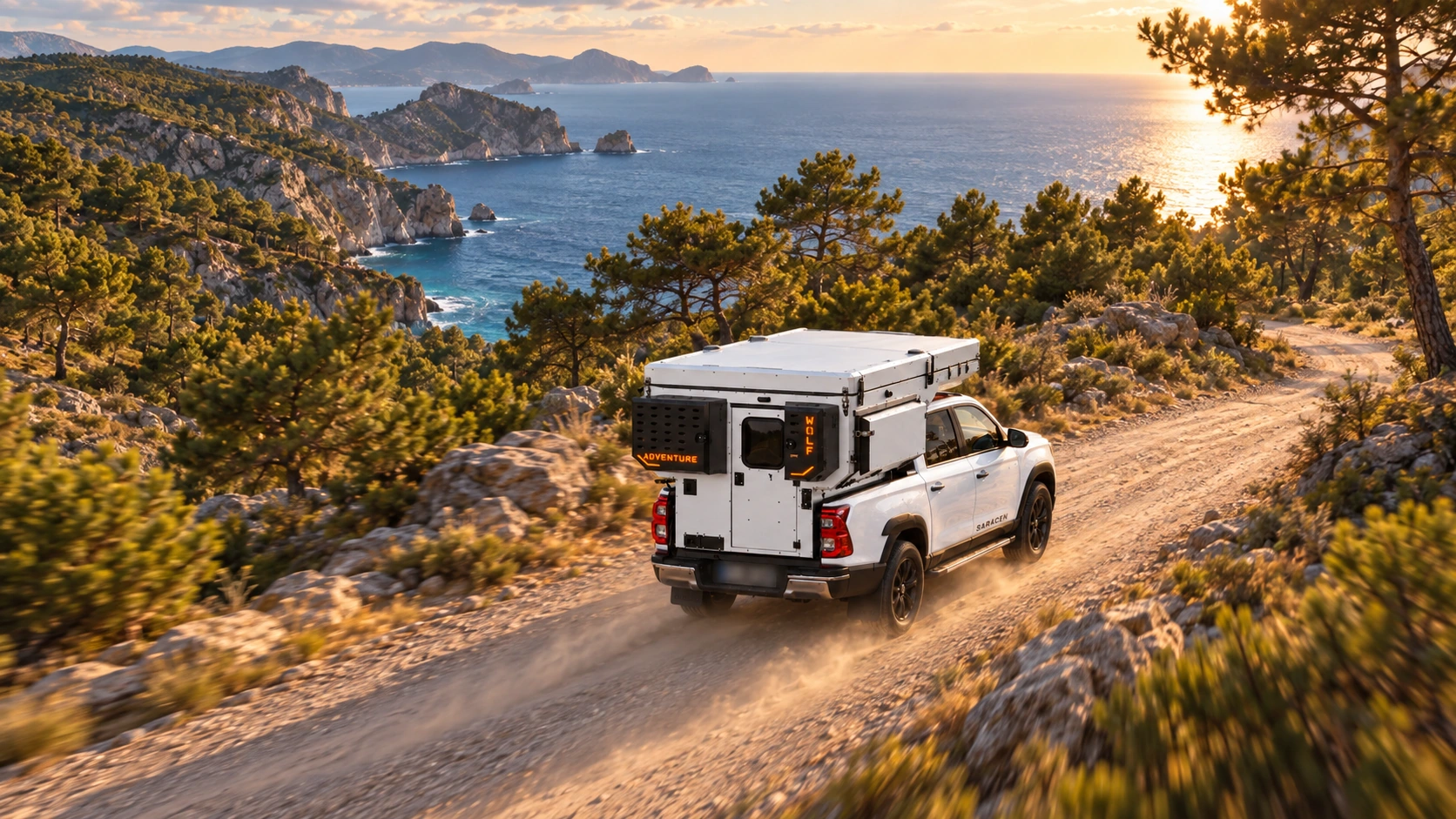
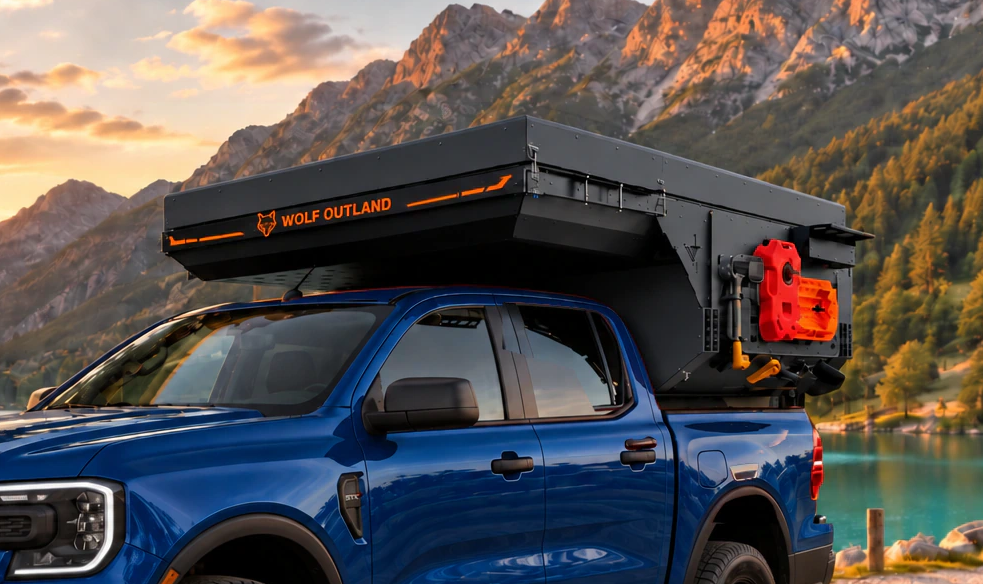
Payload is the starting point for every pickup-camper project. A brochure figure is not enough: vehicle trim, factory options, fitted accessories and front-to-rear weight distribution change the result. A useful calculation starts with the pickup that will actually travel.
Start with the actual vehicle values
Record the gross vehicle weight limit, each axle limit and the measured weight of the pickup in travel condition. Weighing it with fuel, protection, winch, bed cover and other permanent equipment provides a better baseline than a theoretical kerb weight.
Available payload is the difference between the permitted limit and the vehicle as it stands. It still has to carry the travellers, camper, mounting system, water, electrical system, possible gas supply, clothing, food and activity equipment.
- Weigh the vehicle in its usual configuration
- Keep the individual axle limits in view
- Leave a margin for later additions
Build a weight budget
Create a table with one line for every item. Use measured figures where possible and cautious estimates elsewhere. Water is roughly one kilogram per litre, so a full 80-litre tank makes a meaningful difference.
The total alone does not describe road behaviour. Mass position in relation to the rear axle, centre-of-gravity height and tyre pressures should be reviewed with a competent professional. Upgraded suspension does not increase the legal capacity of the vehicle.
Validate the combination before ordering
The pickup data, approval documents and destination rules must tell the same story. Ask for written compatibility confirmation and keep the calculation with the project file.
In the WOLF configurator, enter the exact version, year, cab and bed information. These details turn a preferred finish into a project that can be technically checked.