
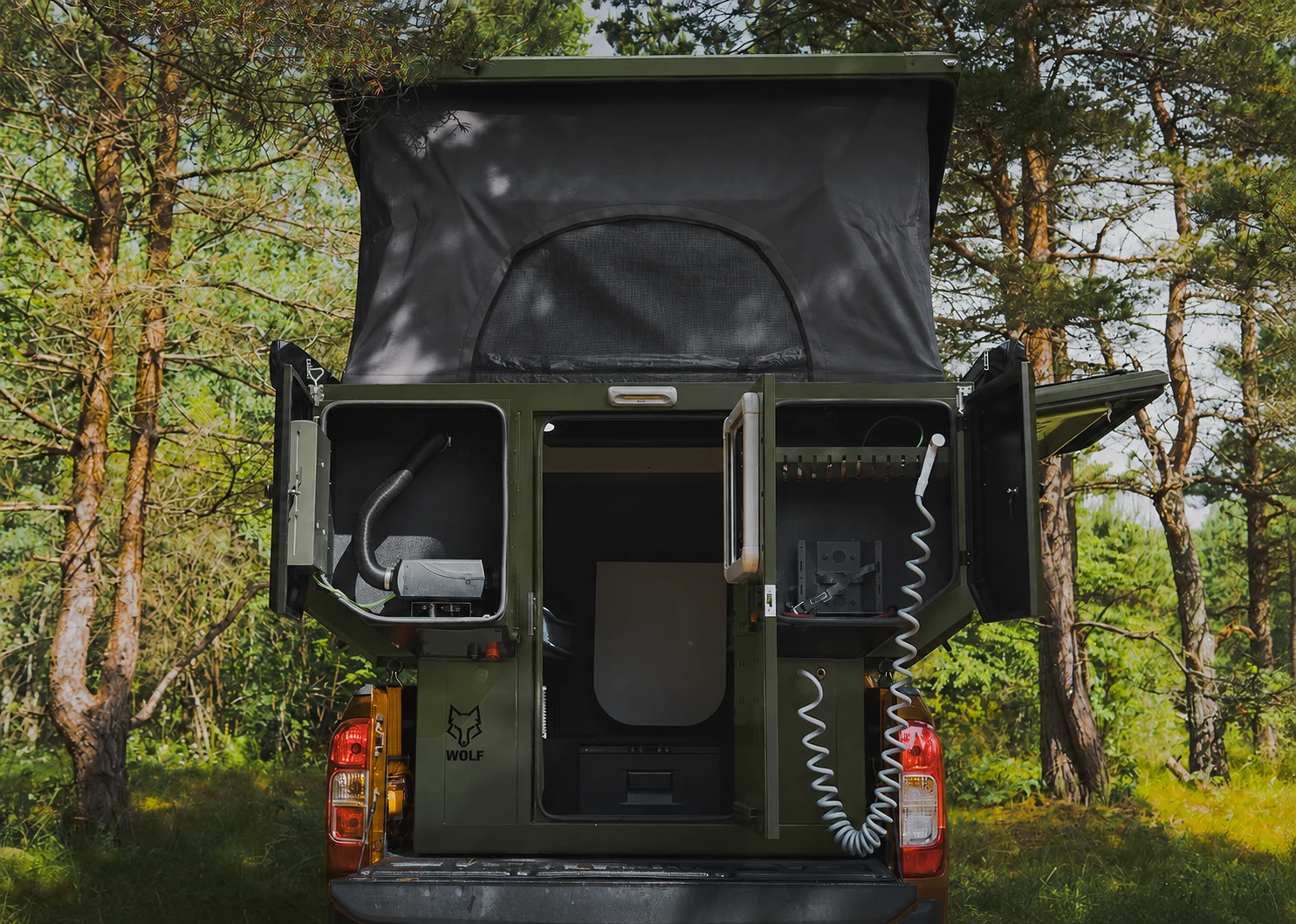
A compact space works for a family when every action has a place and a time. The stated number of beds is only a first reference; access, evening storage and the children’s rhythm decide how comfortable the layout feels.
Rehearse the evening conversion
Imagine arriving in rain: where do shoes, coats, bags and dinner go? Make sure the beds can be prepared without unloading the whole camper. Items needed overnight must stay accessible once the sleeping spaces are ready.
Give every traveller a clearly identified storage area. Soft bags and pouches reduce loose objects on the road and speed up departures.
- A suitable bed for every traveller
- Accessible personal storage
- A clear path to the exit
Separate travel and living space
While driving, every traveller uses an approved vehicle seat and restraint, with suitable child equipment where required. The camper remains unoccupied cargo or living space according to its design and the applicable rules.
At camp, a simple routine divides the tasks: roof, ventilation, water, beds and external storage. Children can help with safe, repeatable actions.
Adjust the pace
Shorter stages leave time to play, walk and establish camp before fatigue. Keep an indoor activity, dry clothing and an easy meal for difficult days.
Before a major departure, test the combination over two or three weekends. Every trial reveals an unnecessary item, a storage location to change or a step that can be simplified.