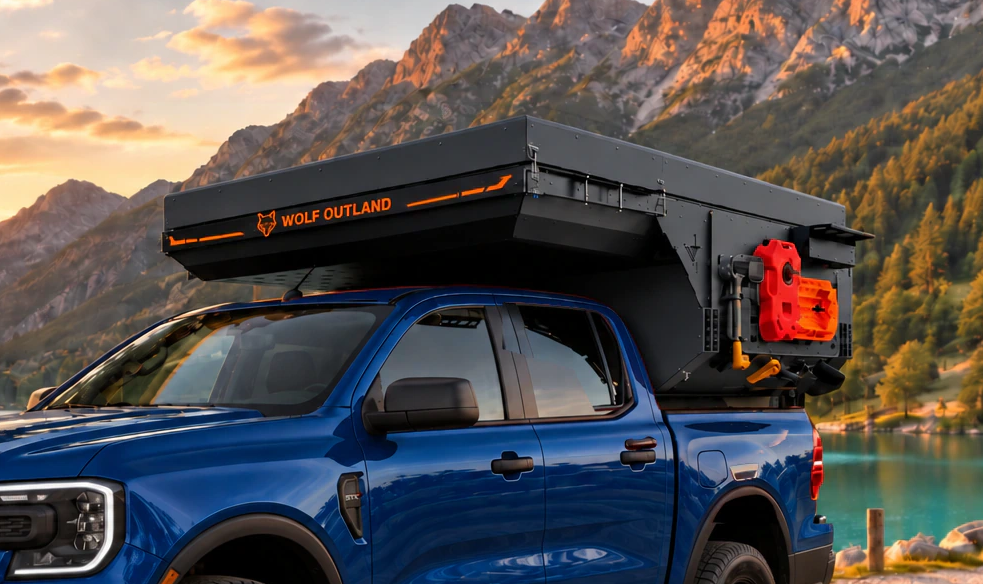
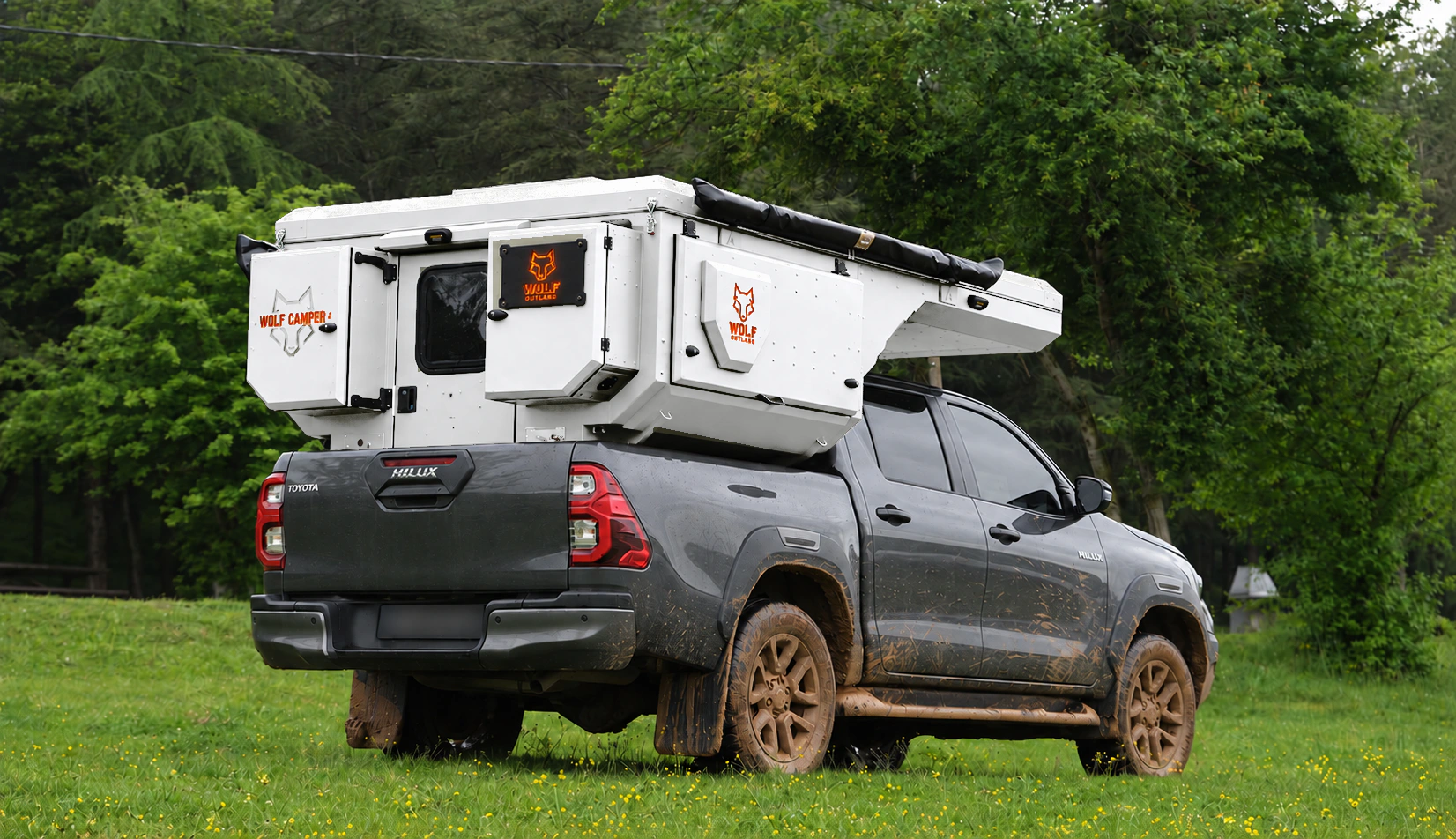
Choosing a pickup for a camper is not about selecting the most powerful model. Bed length, actual payload, axle limits and the way the vehicle works without the camper are often more decisive than engine output.
Begin with the cab and bed
Single, extended and double cabs do not provide the same bed length or weight distribution. Measure floor length, width between wheel housings, side height and the position of approved mounting points.
Two vehicles with the same commercial name may vary by year, market and trim. Compatibility must therefore use the exact specification and measurements from the vehicle.
- Exact version, year and cab type
- Measured pickup-bed dimensions
- Payload and individual axle limits
Consider the whole journey
A large pickup brings capacity but needs more space on narrow roads and in daily life. A compact vehicle may be easier to live with, provided its capacities remain adequate after every load is added.
Include passengers, child seats, sports equipment and the volume you need when the camper is removed. The best compromise keeps the vehicle useful throughout the year.
Confirm every interface
Mounting points, electrical connection, cab clearance, lights and number plate must be reviewed as one system. Tyres need to suit the actual load and remain within their approved ratings.
Use the configurator to select the pickup and finish, then send the precise vehicle information. Technical validation always comes before manufacture or installation.